How to Fix Plastic Pelletizing Machine Bubbles and Hollow Pellets: A Practical Guide for Ghana Recycling Plants
If you run a plastic recycling factory in Accra, Kumasi, or anywhere in Ghana, you know that the quality of your finished granules sets your selling price. One of the most common problems local factory owners face is when the pelletizing machine starts turning out recycled pellets filled with internal bubbles, foam, or hollow air pockets.
In our local West African recycling yards, operators call this “foaming granules” or “hollow pellets.” When the machine yields porous pellets, the density and weight of your bags drop noticeably. Buyers will reject or heavily discount a batch, because hollow granules create weak spots and holes when the plastic is blown into new water sachets or molded into jerry cans.
Add in the high electricity tariffs and the power trips (Dumsor) that come with Ghana’s grid, and running the line to make low-value, spongy pellets is a steady drain on daily profits.
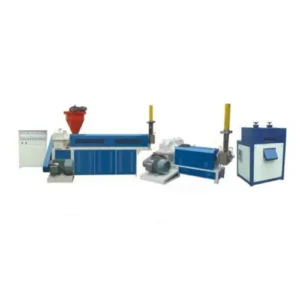
Why Does Your Plastic Pelletizing Machine Produce Porous or Foamed Pellets?
Many factory supervisors assume a faulty screw design or low-grade machinery is the problem. In most Ghanaian workshops, though, bubbles and foam in the melt usually come from trapped moisture or unvented volatile gases expanding as the plastic exits the die head.
The first cause is residual moisture in the feedstock. When you process locally collected plastics — used LDPE water sachets, washed PP woven bags, crushed HDPE shampoo bottles — any surface water that is not fully dried turns into high-pressure steam inside the heated barrel. The steam cannot escape, so it gets trapped in the molten strand and forms bubbles when the pelletizer cuts it.
The second is a failure in the vacuum degassing or venting system. Recycled plastics carry printing inks, paper labels, glue residues, and oils that vaporize into volatile organic compounds (VOCs) at high melting temperatures. If the exhaust vent or vacuum pump is blocked or switched off, those gases stay in the barrel and the granules come out looking like a porous sponge.
The third is localized degradation from running too hot. If a heating zone is set too high, or the screw runs too fast, the extra friction cooks the plastic past its thermal limits. The polymer breaks down and releases decomposition gases that foam up inside the barrel.
Step 1: Upgrading Pre-Drying and Eliminating Feedstock Water Content
Get the moisture out before the flakes reach the feed hopper — that is the first lever. Many small yards in Ghana rely on sun drying, which is unreliable during the rainy season and too slow for high-capacity targets.
A heavy-duty vertical centrifugal dewatering dryer right after the washing tanks spins surface water off the sachet flakes and rigid regrinds.
For larger setups, a heated mechanical drying silo above the hopper pre-dries the flakes fully, removing the hidden moisture so the melt stays solid and steam-free.
Step 2: Servicing the Vacuum Pump and Unblocking the Degassing Vent
If the feedstock is dry but air pockets still show up in the granules, the venting system is the place to look. Operators often ignore the vent port, and molten plastic slowly creeps up, freezes, and seals the gas extraction hole over time.
Have the maintenance technician stop the machine and confirm the power is locked out, let the vent area cool, and put on thermal gloves before chipping away any hardened plastic with a clean copper tool — copper is softer than the steel surfaces, so it will not scratch them.
Then check the vacuum pump: the water-ring pump needs a clean water supply, the gaskets must not be leaking air, and it should be pulling strong vacuum. With the volatile gases drawn off cleanly from the degassing zone of the screw, the strands stay dense and solid.
Step 3: Calibrating Heating Zones to Prevent Thermal Degradation Gas
If overheating and over-shearing are breaking the plastic down into gas, adjust the temperature profile and motor speeds. Look at the control panel and focus on the metering zone and the die head heating sections.
If the temperatures are overshooting your material’s limits — for example HDPE jerry can regrind running above 230°C — step the heating bands down gradually in those zones.
At the same time, if operators are running the screw at maximum rpm to chase the daily target, lower the speed a little to cut the friction and shear heat. A balanced heat profile stops the plastic decomposing into gas, and the granules come out clean.
Summary: Produce Solid Recycled Pellets and Secure Premium Buyers
With proper pre-drying for wet scraps, clear degassing channels, and barrel temperatures tuned so the polymer does not burn, you can bring the bubble and foaming problems under control. That keeps your plant turning out heavy, uniform, solid pellets that hold their value across West Africa, and it makes better use of the electricity you are paying for.