How to Fix Film Blocking and Poor Opening in Plastic Bag Production: A Guide for Ghana Manufacturers
T-shirt bags and carrier bags are the bread and butter of a packaging plant in Accra, Tema, or Kumasi, and few problems annoy the customer more than a bag that will not open. Film blocking is the trade term: the two inner layers of the tube press together and refuse to separate, and the bag has to be rubbed between the fingers before the mouth will part.
At the market in Makola or a supermarket till in East Legon, that ten-second struggle is a brand problem. Inside the plant it is worse — the cutting and sealing line jams, the feeder slips, and rolls that should sell at full price go out as discounted scrap.
Why Blown Film Layers Block in Ghana’s Heat and Humidity
Blocking is a surface effect. Two very smooth layers pressed together, with a little heat and a little pressure, develop enough attraction to stick, and the trapped air between them is squeezed out so nothing separates the plies.
Cooling is the first cause. When the line is pushed hard on a hot afternoon, the film can reach the collapsing frame while still warm, and the nip rollers then press two tacky surfaces together and wind them tight. Warm film plus winding tension is the classic combination, and Ghana’s humid air makes it more likely because damp cooling air removes less heat than dry air does.
Resin choice matters, but the mechanism is often described wrongly. It is the soft, low-density, smooth films that block most readily, which is why LDPE-rich blends give more trouble than stiffer, higher-density material. Recycled pellets make it unpredictable, because the additive level in regrind is whatever was in the scrap that week.
Storage finishes the job. A roll that leaves the winder slightly tight and sits in a warm warehouse for three days will often arrive at the customer fully blocked.
Cooling and Winding: The Mechanical Fixes for Blocking
Start before the film reaches the frame. Raise the air ring blower output, but verify that the air is actually cold — a chiller that is running warm, or a heat exchanger with a fouled coil, will not cool anything no matter what the gauge says.
Then bring the frost line down so the polymer sets while the bubble is still inflated, and the inner walls are cool and dry by the time the nip closes them. In humid weather this needs watching daily, because the same settings that worked in the dry season leave the film warm in the wet one.
Winding practice is the second lever. Operators wind tight to prevent telescoping in transit, and that pressure is exactly what drives the plies together. Reduce winding tension and lower the nip pressure until you are just above the point where the web slips, and roll density drops to something that opens cleanly.
Test the result properly and safely. Cut a sample, let it rest, and try to part the layers by hand — with the line stopped, never at a running nip.
Antiblock, Slip, and Co-extrusion: The Chemistry Side
Two additives do the work, and they are different jobs. Antiblock — silica or talc based — puts microscopic bumps on the surface so the layers cannot sit flat against each other. Slip — usually an amide — lowers the coefficient of friction so the bag mouth slides open once it has been started.
Dose both to the masterbatch supplier’s recommendation rather than by feel. Too little and the roll blocks; too much antiblock and the film hazes and plates out on the die; too much slip and you create the next problem downstream, because amide on the surface is exactly what stops ink from keying. If the same film goes to print, that trade-off has to be settled before the run.
Give the slip time to work. Amide needs 24 to 48 hours to migrate to the surface, so a roll that feels tight straight off the winder often opens cleanly the next day. Judge blocking after resting, not at the winder.
Corona treatment belongs on this list too. Over-treating to chase a dyne number raises surface energy and makes the film tackier, so treat to the target the print actually needs rather than to the highest reading the pen will give.
Equipment That Keeps the Roll Open Through Peak Season
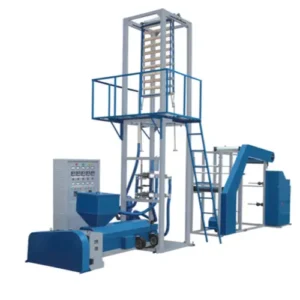
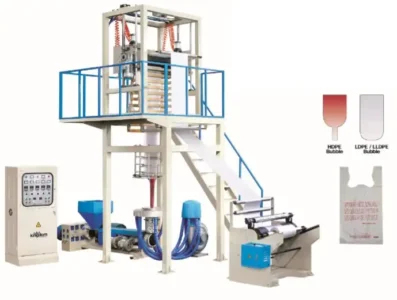
Where blocking keeps returning in the hot months, the line itself is the limit. A dual-lip air ring with internal bubble cooling removes heat far more effectively than an open ring, which lets you hold output without trapping warmth in the roll.
Co-extrusion helps in a specific way: ABA or three-layer structure lets you put slip and antiblock in the skin layers where they are needed, and keep recycled material in the core where surface properties do not matter. That placement is what makes recycled content workable in a bag film at all.
A winder with taper control finishes it, because roll density then falls as the roll builds instead of climbing.
Blocking is heat, pressure, and surface all pushing the same way. Cool the web before it collapses, wind it softer, dose the additives to a spec, and the bag opens on the first try.
If your plant is losing rolls to blocking, or you are specifying blown film lines and additive packages for Ghana’s humid climate, our technical team would be glad to review your setup.