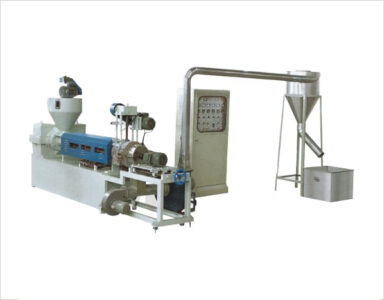
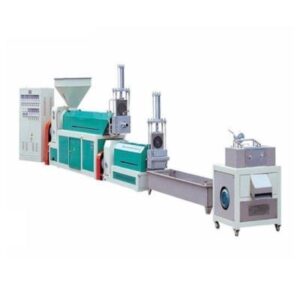
How to Fix Plastic Pelletizing Machine Linked Pellets and Cutting Failures: A Practical Guide for Ghana Recycling Plants
If you run a plastic recycling factory in Accra, Kumasi, or anywhere in Ghana, you know the appearance of your final granules decides how fast you get paid. One of the most frustrating setbacks is when the machine starts producing linked pellets that clump together, or strands that refuse to cut cleanly.
Operators in local West African yards often call this “linked pellets,” “chain granules,” or “uncut strands.” When the machine outputs bunches of connected pellets instead of uniform individual granules, local buyers may reject the whole delivery. Manufacturers who blow pure water sachets or mold jerry cans cannot feed linked pellets into their lines — the clumps quickly block hoppers and jam extruder screws.
With high electricity tariffs and the constant threat of power drops or Dumsor in Ghana, spending factory runtime on messy, uncut scrap blocks is a real hit to your daily cash flow.
Why Does Your Plastic Pelletizing Machine Fail to Cut Cleanly?
Many supervisors assume the cutter motor is broken the moment they see chain granules. In most Ghanaian workshops, though, cutting failures and linked pellets come down to three practical causes: strand temperature, cooling water conditions, and cutter blade wear.
The first cause is an excessively high melt temperature at the die head. When processing locally collected plastics like LDPE pure water sachets or crushed HDPE jerry cans, if the final heating zones run too hot, the strands leave the die plate soft, sticky, and semi-liquid. Even when the cutter hits them, the hot plastic deforms or fuses back together right at the blade interface, making long chains of connected granules.
The second cause is insufficient cooling in the water trough before the strands reach the pelletizer. In many yards, the cooling water in the long steel tank gets hot after a few hours of continuous running. If the water gets too warm or the level drops, the strands do not freeze through to the core, and they enter the cutter feed rollers still warm and sticky.
The third cause is a blunt cutter blade or a wrong clearance between the rotary knife and the stationary bed knife. Over months of running recycled plastics that often contain traces of sand, dust, or debris from scrapyards, the blade edges dull. That wear stops the cutter from making a clean snap, so it folds or tears the strands into messy links.
Step 1: Lowering Die Head Temperature to Control Melt Stiffness
Start with the exit point: check the control panel and the temperature settings for the flange and the die head zone.
Step the heat down in these final zones by 5 to 10°C to raise the viscosity and stiffness of the exiting melt.
At that slightly lower temperature, the strands hold a firm shape as they form, and the cutter chops through them cleanly instead of the hot plastic fusing back into chains.
Step 2: Managing Water Trough Circulation and Reducing Water Temperature
If the temperatures are right but the strands are still too soft to cut, move to the cooling stage. Check the water trough flow and make sure a steady supply of fresh, cold water is circulating into the tank.
On hot Ghanaian afternoons, water in a stagnant tank heats up fast — a simple water recycling pump or a small cooling tower keeps the temperature down.
Giving the strands enough time in genuinely cold water sets the material so it has no sticky surface left when it reaches the pelletizer.
Step 3: Sharpening the Cutter Blades and Tuning Knife Clearance
If linked pellets persist despite cold water and lower temperatures, the cutting hardware needs attention. Schedule a short stop during a shift change to inspect the pelletizer assembly.
Lock out the machine and wear cut-resistant gloves before handling the blades — they are sharp and easy to cut yourself on. Have your mechanic check the rotating blades and the fixed anvil bed knife, and use a bench grinder or a professional sharpener to bring back a clean edge if they are dull.
When reinstalling the knives, use a feeler gauge to set the clearance between the moving and stationary blades to about the thickness of a sheet of paper. That calibration gives a crisp shear action that separates the strands into clean, individual granules without hanging links.
Summary: Keep Your Output Uniform to Win Trust with Local Manufacturers
By holding the die head heat steady, keeping a cold, continuous water supply, and keeping the blades sharp and aligned, you can clear up linked pellets on your line. Your plant can then put out uniform, free-flowing granules that West African manufacturers buy readily at good rates, keeping the factory competitive and profitable.